
Selecting Vinyl
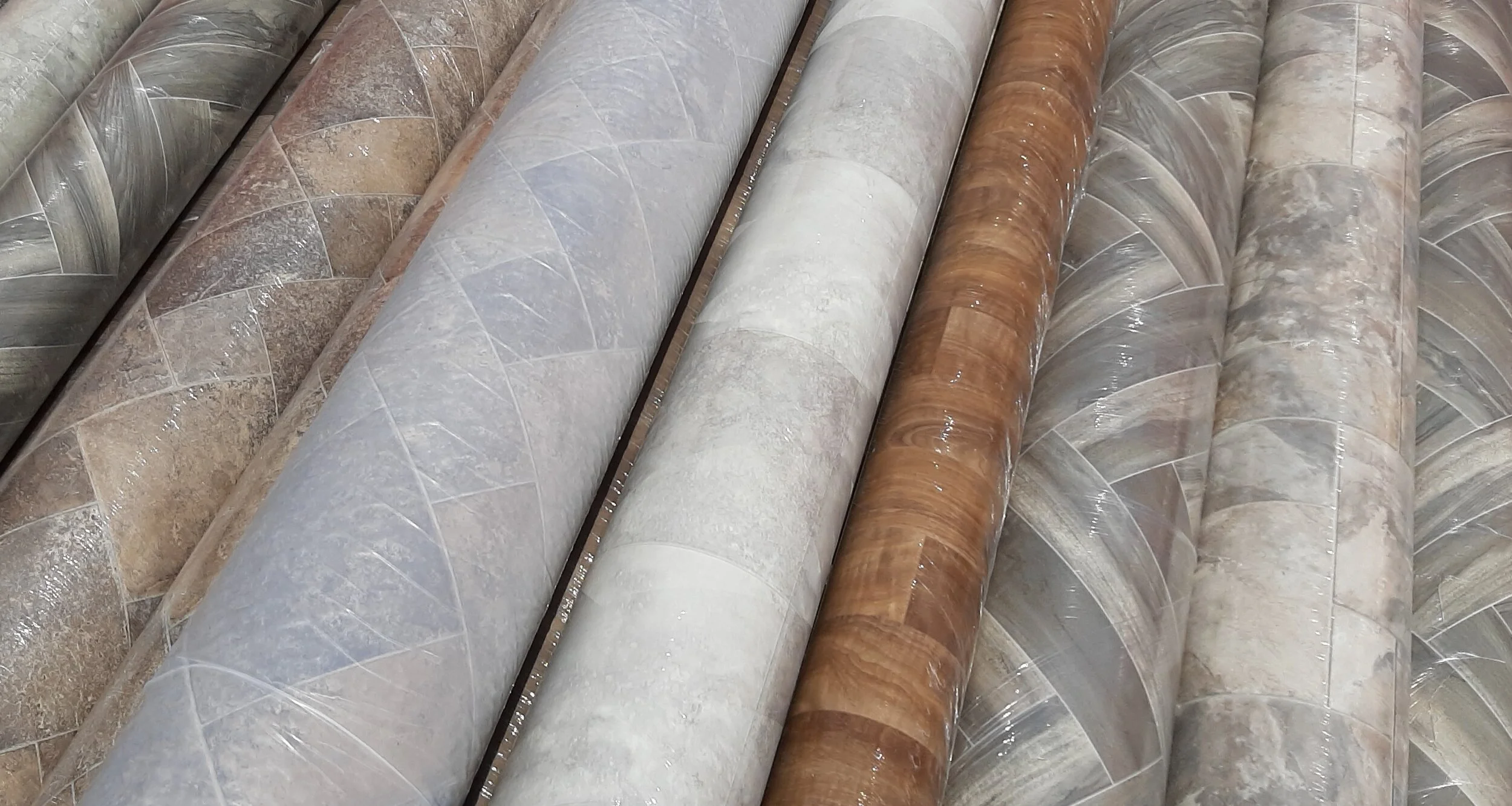
This guide is for roll vinyl and linoleum (also called sheet vinyl), if you’re looking for Vinyl Planks (LVP) click here.
Sheet vinyl has come a long way and can provide nearly any look at an unbeatable value with a long-lasting lifetime. They come in various widths as well. Most common is 12 ft. wide, but they are also manufactured in 13 ft. 2 in. and even 16 ft. wide.
Vinyl comes in every possible style, color, and pattern. Popular styles are woodgrain, ceramic tile, stone patterns, abstract styles, and anything you can think of. This guide goes over the basics of vinyl and linoleum to aid you in selecting the best product for your home and budget.
About Vinyl and Linoleum
Linoleum and vinyl somewhat go hand in hand, but there are significant differences. Chances are, you’ve actually seen linoleum floors somewhere that are older than you!
The Differences
Vinyl and linoleum (and even Luxury Vinyl Plank or LVP) are made up of layers. Their difference is in the layers. Vinyl and linoleum both have a clear wear layer on top, which is usually urethane. Under the wear layer is where they differ: Vinyl has an image layer, which is the style and pattern you actually see, which is actually a sheet. Linoleum’s image layer is actually permeated throughout the entire core of the material, rather than just one layer. Under vinyl’s image layer is the core, which is made of vinyl (PVC or polyvinyl chloride). Today’s linoleum is commonly also made from vinyl. Lastly, the final layer is where an underlayment material can be attached, be it for cushion, mildew resistance, installation characteristics, or structural integrity.
A significant difference is installation characteristics. Linoleum is almost always glued down. Vinyl on the other hand can be installed in many ways, free-floating, glued, or spot glued.
They both require very flat, clean subfloors. The biggest job of installation for both is usually floor prep.
Linoleum
Linoleum has a long history, first patented in 1863 by a Scottish manufacturer. It was essentially the first flooring breakthrough invention since wood and tile—it predates mass-produced tufted carpet which only came to fore in the 1940 to 1950’s. Linoleum is often viewed as less modern by many homeowners, but there are others who swear by it.
To keep it simple, today linoleum is widely referred to as paperback vinyl. Its composition has changed and is now widely also made from polyvinyl chloride (PVC).
Vinyl
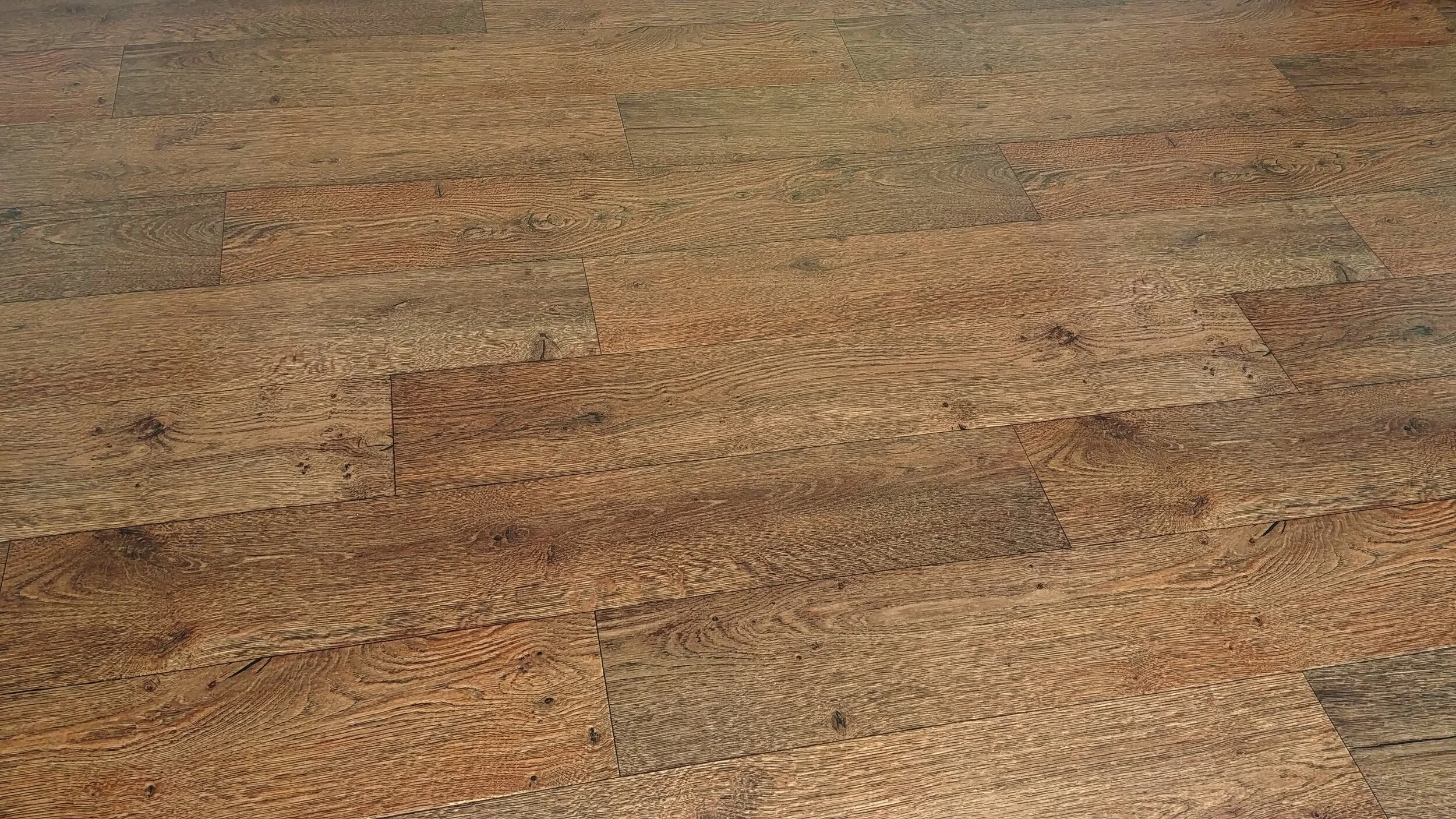
Sheet vinyl is frequently textured to match its look—from the natural variations of a woodgrain to the rough texture of a stone pattern
Vinyl is one of the most versatile and economical flooring options today. It can come in any pattern you can imagine, and can be made with a textured surface to mimic woodgrain for wood, grout lines for tile, and texture for stone.
Vinyl is waterproof. It can even be used in commercial applications. It’s one of the easiest flooring options to keep clean and maintenance.
Vinyl is made of and derives its name from Polyvinyl Chloride (PVC). This is the same PVC commonly used in PVC pipes, but it’s formulated differently to be more rubber-like and have better flooring properties. This plasticized PVC was invented by the B.F. Goodrich Company in 1926. Vinyl as a flooring option became widely produced after the end of World War II. All flooring vinyl made in the USA is home air safe.
Choosing Vinyl & Linoleum
Vinyl comes in such a wide variety of styles and colors that any look you desire can be found in vinyl. The look factor is up to your inner interior designer. But there are other characteristics besides looks that require a trade off between budget and other characteristics
Pay attention to the wear layer thickness – not to be confused with overall vinyl thickness. This is what will make your vinyl last. The wear layer is essentially the invisible finish that protects the look of your vinyl. 10 mil is the minimum wear layer to meet FHA requirements. The thicker the wear layer, the more the vinyl will cost, but will make your vinyl last longer.
How do you want you want your vinyl to feel? Generally, the thicker the vinyl, the softer. Thicker vinyl will provides more cushion comfort under your feet but it comes at a cost. Also, do you want texture to your floors? A woodgrain vinyl with woodgrain texture will give your floors a richer and more luxurious look.
Pay attention to the gloss. All things equal, the higher gloss will lose its gloss over time in high traffic areas compared to lower gloss. Gloss may also show dirt and scratch more in depending on room lighting. It also comes down to stylistic preferences.
One drawback to keep in mind with thicker vinyl is if you plan to rearrange your room. Heavy furniture under your vinyl can leave indentations if moved after being left in place for long periods of time. Temporary indentations will come out, but some may not if under a heavy load for a long duration.
An immense benefit to vinyl is its repairability. Vinyl can be spot repaired nearly seamlessly if you have a tile or woodgrain patterns. Skilled flooring installers can cut out tiles or planks from your vinyl floor and replace them with a matching vinyl. This is a lesser known factor, but can be a great benefit to your wallet!
For vinyl, it’s good to know the condition of your subfloors. Vinyl is nearly always one of the most economical options, but it requires a flat, smooth subfloor. If your floors are flat and clean, it is one of the easiest and quickest products to install. If your floors are damaged or uneven in some way, have a full discussion with one of our flooring professionals to get an installation quote upfront. Also, in certain cases and flooring situations, vinyl may be installed on top of old vinyl. If that old vinyl is clean and flat, this will save you money. It’s frequently performed to reduce labor costs, but also removing old glued down vinyl can cause problems with the subfloor while also increase the flooring prep work cost.
Special Note About Peel and Stick Vinyl Tiles
Peel and stick vinyl is often favored for it’s simplicity to do-it-yourself. But a word of caution: In all our experiences going in homes for installation or measure, we very, very, very, very rarely see a peel and stick product last. Did we say that it’s very rare?
Peel and Stick almost always peels up at edges, buckles, develops planar distortion, or has rough gaps — somewhere. We advise you to keep that in mind! Even if roll vinyl is a little bit more, if it’s within your budget, it is always a better lasting option.