
Selecting Luxury Vinyl Plank (LVP)
Year over year, Luxury Vinyl Plank (LVP) has been the fastest growing floor covering option in the United States today. LVP has come a long way and is now one of the most trusted and durable floor covering options on the market. Like roll vinyl, it’s 100% waterproof and can be found in every price range.
LVP vs LVT
Luxury Vinyl Tile (LVT) and Luxury Vinyl Plank (LVP) are sometimes informally used interchangeably. They are made in the same way and from the same thing, but are actually different products. To be specific, LVT refers to a tile-shaped vinyl square that usually comes in a stone or ceramic style. LVP refers to a plank-shaped vinyl board that comes in wood styles. It can vary by region and company, but LVP may be colloquially called LVT. Luxury Vinyl Tile (LVT) was invented first and hence why the name stuck. Though today, LVP represents over 70% of the Luxury Vinyl market.
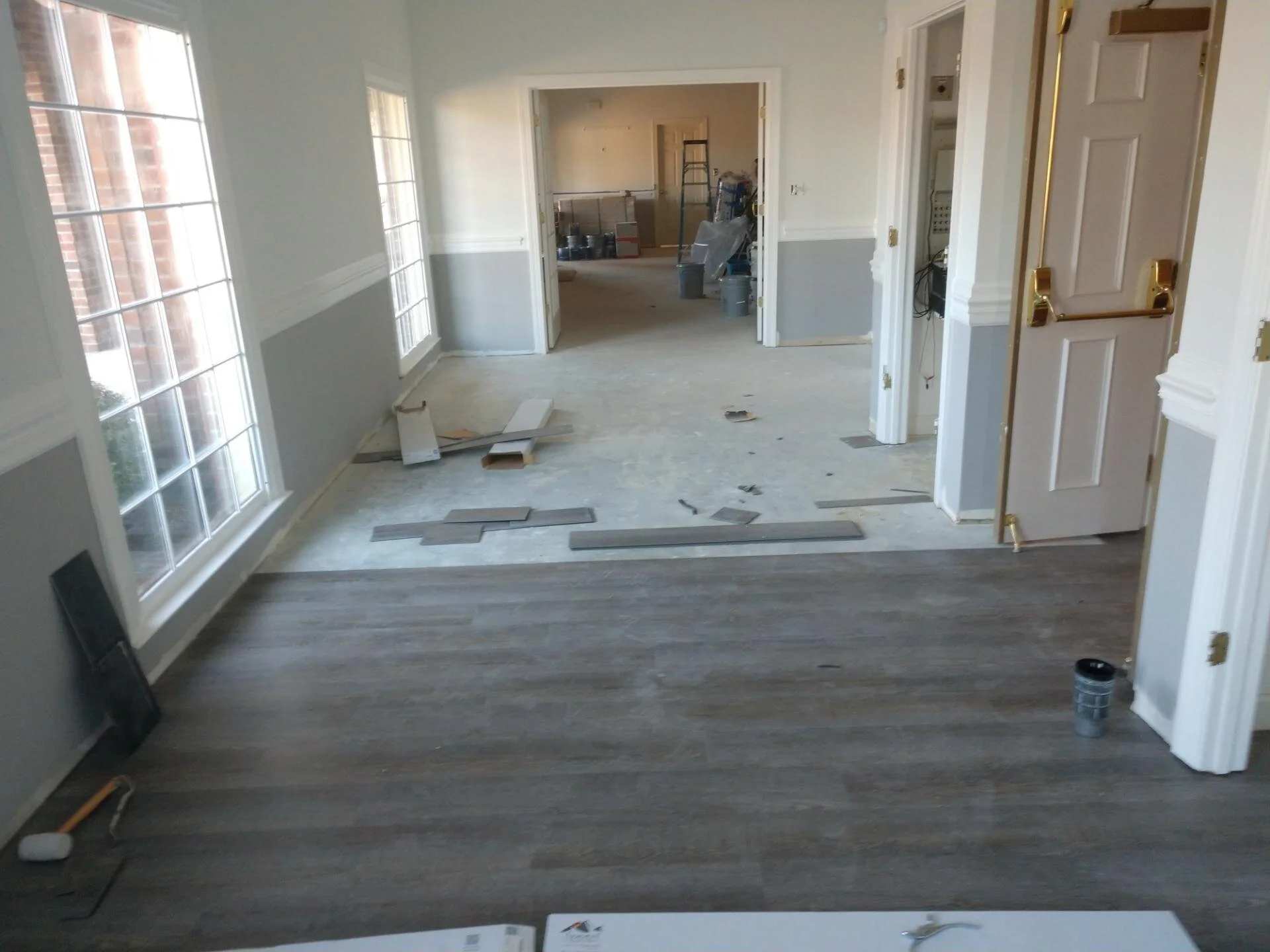
Luxury Vinyl Plank (LVP) being installed in a hotel. Notice how the LVP flows under the doorjamb.
What is LVP?
LVP is a vinyl plank that simulates real hardwood planks, but with greater ruggedness and maintenance characteristics while being 100% waterproof. They can come with a textured surface that mimics the grain and ridges of the wood pattern. They can come in every wood style and color imaginable. LVP is versatile and can suite anything from a common household or high-end luxurious uses to durable high traffic commercial.
LVP is comprised of layers.
The top layer is always the wear layer. The wear layer is usually a clear, light cured urethane. Generally, the thicker the wear layer, the better the durability of the plank. This wear layer thickness is measured in “mils”. A mil = 1/1,000th of an inch, or 0.001 inches. Wear layer thicknesses range from 4 mil to up past 30 mil. 12 mil is a good thickness for a wear layer.
Beneath the wear layer is the image or print layer. It’s the layer that actually contains the image of wood you see on the floor. It can be printed to photo-realistically match any style of wood imaginable. Planks can be manufactured in such a way that the grooved texture of the surface of the plank synchronizes realistically with the grain in the print. This is called embossed in register.
Under the image layer is the core. The core can be rigid or flexible. There are 3 common core compositions for LVP. They are: vinyl (polyvinyl chloride), SPC (stone plastic composite), and WPC (wood plastic composite). Today, the most common core composition for LVP is vinyl. The core provides the strength and fullness to the LVP. The core composition doesn’t impact the actual look or style of the LVP.
The final layer is the backing layer. It can be a soft or cork pad that provides cushioning and sound dampening characteristics, or provide textured surface to help secure glue-down planks to an adhesive.
LVP comes in two styles. Click-together and glue-down.
Click-Together
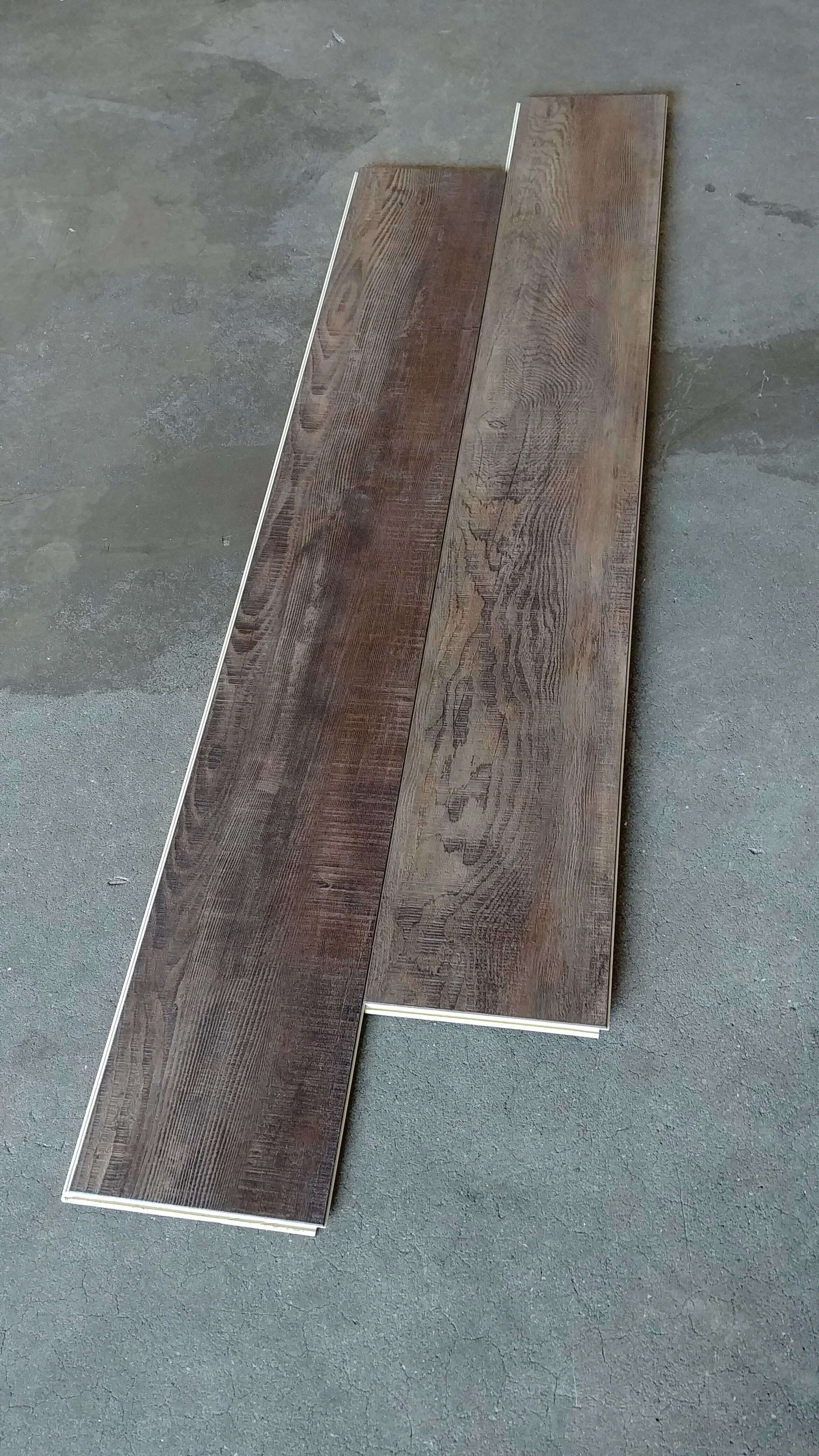
Click-Together LVP is secured together with patented click-locking systems. In recent years, the click-locking systems have become more unified and DIY friendly.
LVP in the click-together variety comes with interlocking system which secures the planks together and across the subfloor.
One main benefit is that click-together LVP is that it can be laid “free floating”. That is, it doesn’t have to be directly secured to the subfloor with nails or glue. In some cases, LVP can even be installed over dry, level, flat, clean, and old floors. Click-together LVP can also come with an acoustic cushion padding. LVP doesn’t have the hollow tap sound you may find with laminates. Click-together LVP has a decent repairability factor. Damaged planks can be replaced, but it will require removing a path of interlocking planks.
Glue Down
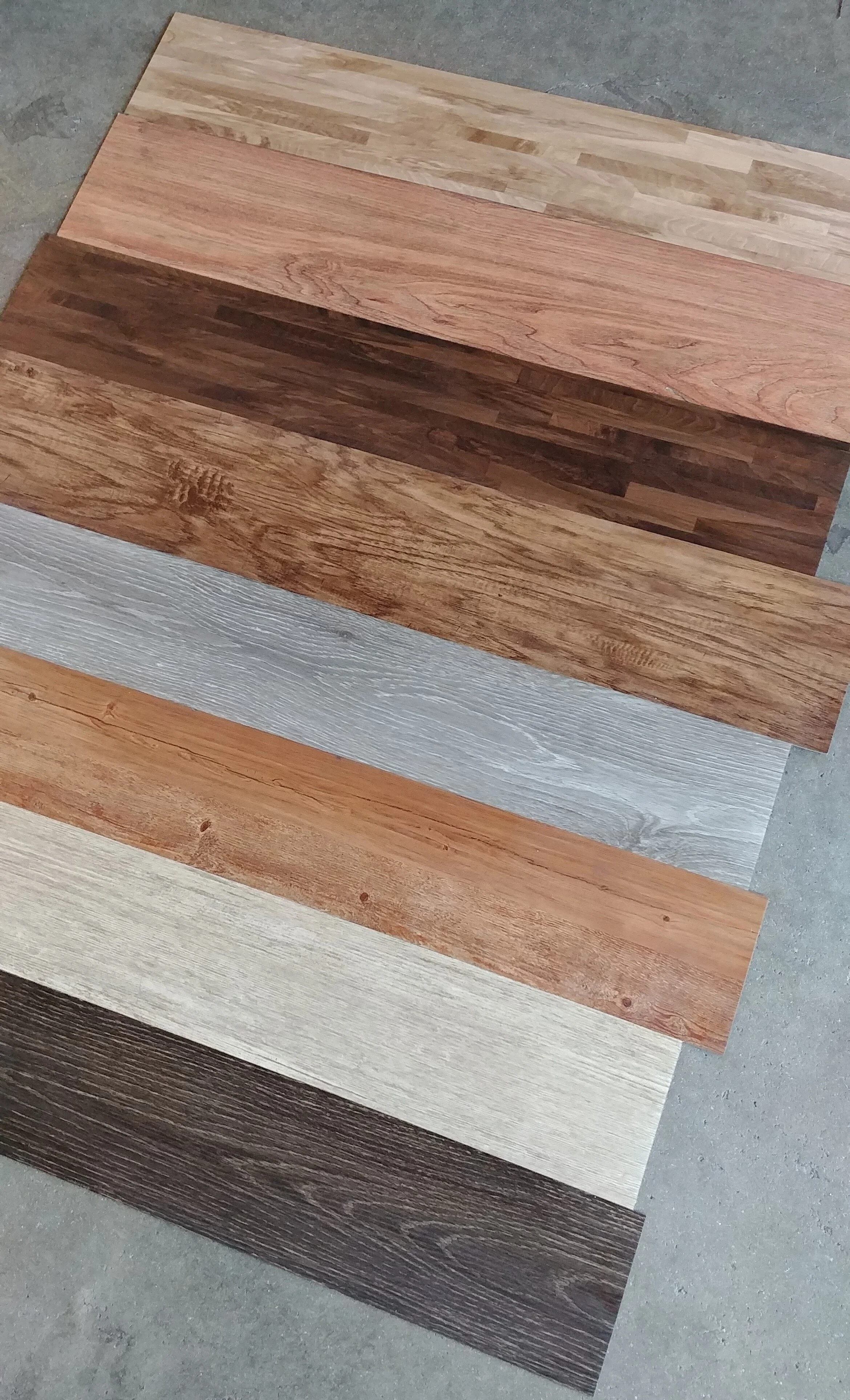
Glue-down LVP is thinner, but that doesn’t mean it’s less rugged or has a thinner wear layer.
Glue down LVP are boards with a flexible core that are secured to the subfloor with glue adhesive.
Because the glue provides dimensional stability, glue down LVP excels in rugged use cases such as heavy traffic, rolling traffic, and commercial. It also has an advantage that even with the cost of glue, glue down in total generally costs less than an equivalent click-together. Like click-together LVP, it can be spot repaired. However, glue down in particular is perhaps the easiest plank flooring product on the market to spot repair. Individual damaged planks can be seamlessly replaced without having to remove other planks.